The Article That Said What Pratapgarh Already Knew
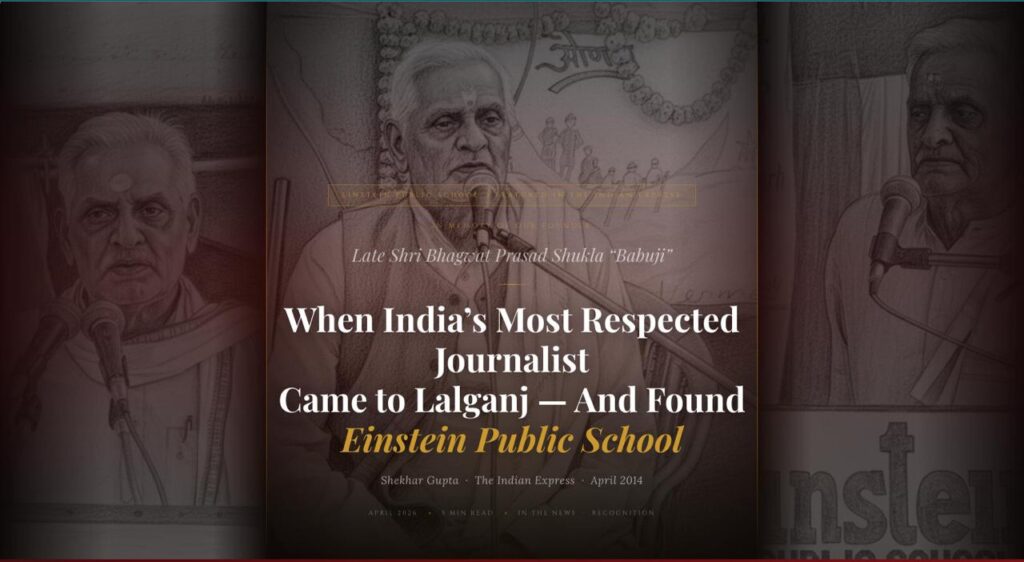
In April 2014, Shekhar Gupta — then Editor-in-Chief of The Indian Express, founder of The Print, and one of the most authoritative voices in Indian journalism — was travelling through Uttar Pradesh.
He was doing what he has done for decades: reading the country not through press releases or political speeches, but through what he famously called “Writings on the Wall” — the signs, hoardings, coaching centres, and schools that line India’s highways and village roads, quietly telling the story of a nation’s changing aspirations.
He had travelled through Bundelkhand, through the UP heartland, through districts where aspirations were being written on walls for anyone willing to read them. And on that journey, his observations brought him to a specific, telling example of what was changing in the educational landscape of districts like Pratapgarh.
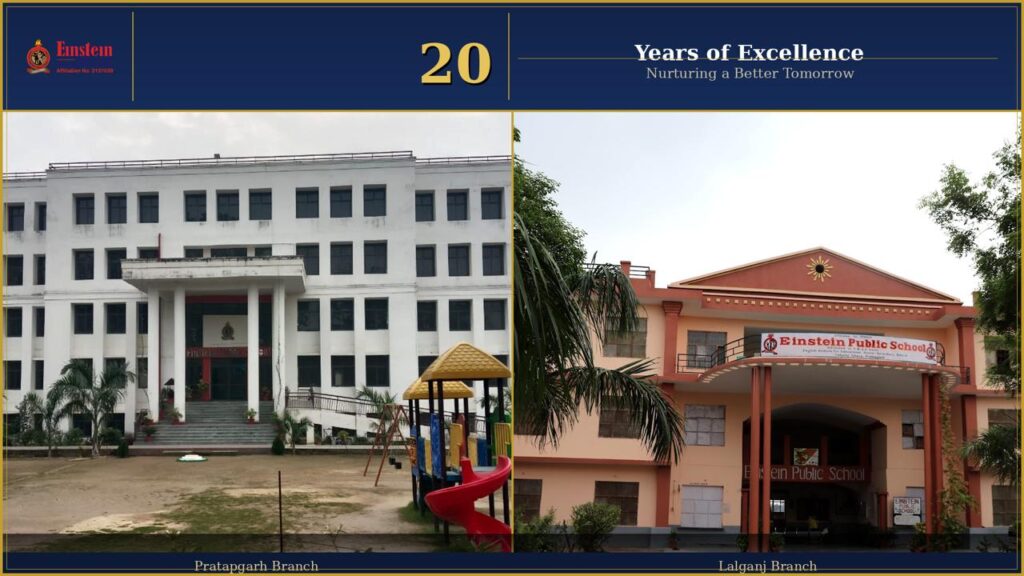
That example was Einstein Public School, Lalganj.
The article, published in The Indian Express under his celebrated “Writings on the Wall” series and later republished on The Print, placed EPS in a national conversation about aspiration, education, and the transformation of districts like Pratapgarh. For a school barely eight years old at the time, it was recognition of a kind that cannot be applied for, lobbied for, or purchased — it can only be earned.
Who Is Shekhar Gupta — And Why This Matters
To understand the significance of this recognition, it helps to understand who Shekhar Gupta is.
Gupta joined The Indian Express as a cub reporter at its Chandigarh edition in 1977 — the year of India’s first post-Emergency election, one of the most consequential moments in the nation’s democratic history. Over the decades that followed, he built a career that took him from reporting on the ground in Kashmir, Punjab, and Sri Lanka during their most turbulent years, to becoming Editor-in-Chief of one of India’s most respected national newspapers.
His “Writings on the Wall” series became a landmark in Indian political journalism — a form of ground-level, eyes-open reporting that cut through official narratives to find the real India in its roads, its villages, its walls, and its people’s dreams. It is the kind of journalism that does not seek out the powerful — it seeks out the true.
When Gupta writes about a school in a district like Pratapgarh, it is not a courtesy mention. It is a journalistic observation. It is him saying: this matters. This is real. This is part of the story of India.
What the Article Was Really About — Aspiration in the Heartland
Gupta’s 2014 piece was a portrait of a changing Uttar Pradesh — a state where, beneath the noise of politics and the weight of history, something important was happening quietly. The talk, wherever he went chasing elections in Uttar Pradesh, was about education, jobs, better life, and aspiration.
He observed across Bundelkhand and UP’s heartland that one of the big new changes sweeping the country, and evident in the writings on the wall, was the desperate hunger for modern education.
The walls of UP were no longer just selling political promises. They were selling something more enduring: the dream of a better-educated, better-equipped, more confident next generation.
In this context, Einstein Public School was not simply a school. It was — as Gupta’s reporting made clear — a symbol. A visible, concrete answer to a question that thousands of families in Pratapgarh were asking: Is it possible for my child to access a truly good education, right here, close to home?
EPS had been answering that question with a quiet, consistent yes since 2006.
Why Pratapgarh’s Aspirations Were Always Real
Gupta’s article gave national voice to something that parents in Pratapgarh had already understood instinctively. The aspirational upsurge that had enveloped the rest of India was also vibrant in UP’s heartland.
Families in this district were not waiting for conditions to improve before investing in their children’s education. They were investing in order to improve conditions. They understood — before most policy papers articulated it — that education is not a luxury that follows prosperity. It is the engine that creates it.
Einstein Public School was founded on exactly this understanding.
When Babuji laid the foundation stone in Lalganj Ajhara on September 4, 2006, he was not responding to an existing demand for a CBSE school. He was creating the possibility — opening a door that did not previously exist, and trusting that the aspirations of Pratapgarh’s families would walk through it.
They did. In their thousands.
A Validation That Belongs to Every EPS Family
It would be easy to read the Indian Express recognition as an accolade for the school’s management or leadership. But that would miss the deeper truth.
Shekhar Gupta was not writing about a building, or a curriculum, or a set of exam results. He was writing about people. He was writing about families in Pratapgarh who chose, year after year, to prioritise education. About students who sat in EPS classrooms and absorbed not just knowledge but confidence — the confidence that they could compete, and win, anywhere in India. About teachers who came from across the country to be part of something they believed in.
The recognition in The Indian Express belongs to every parent who enrolled their child at EPS. Every student who stayed up late preparing for a board exam. Every teacher who went beyond the textbook to make a concept come alive. Every staff member who kept the campus running. Every family who trusted this school with their most precious investment.
It belongs to Pratapgarh.
Twelve Years Later — The Story Continues
The article was written in 2014. Twelve years have passed. And the story Shekhar Gupta observed — of a district’s aspirations finding expression through education — has only grown deeper and more compelling.
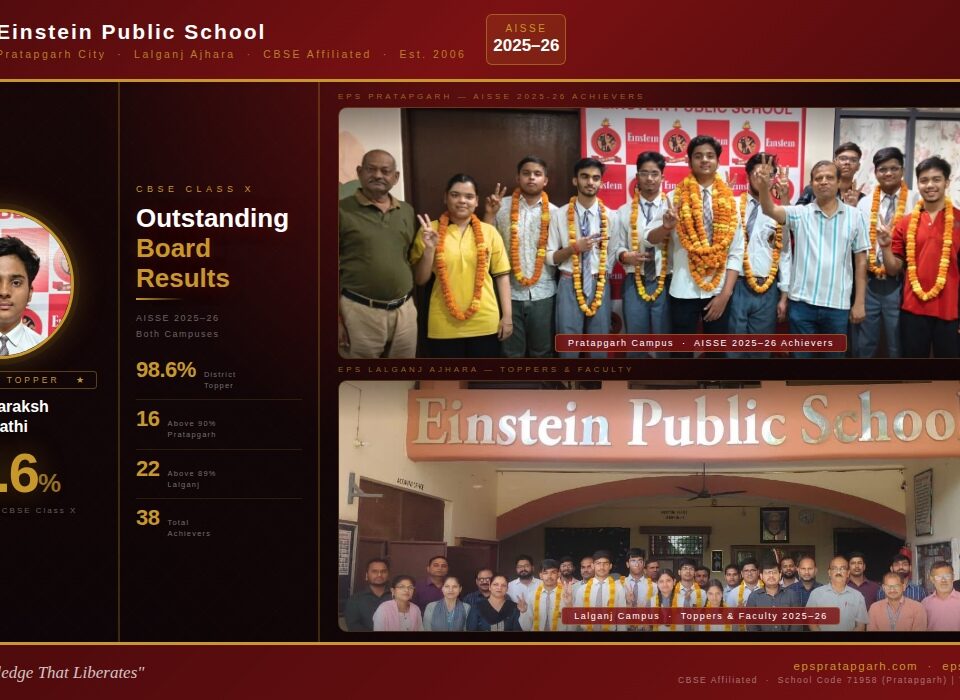
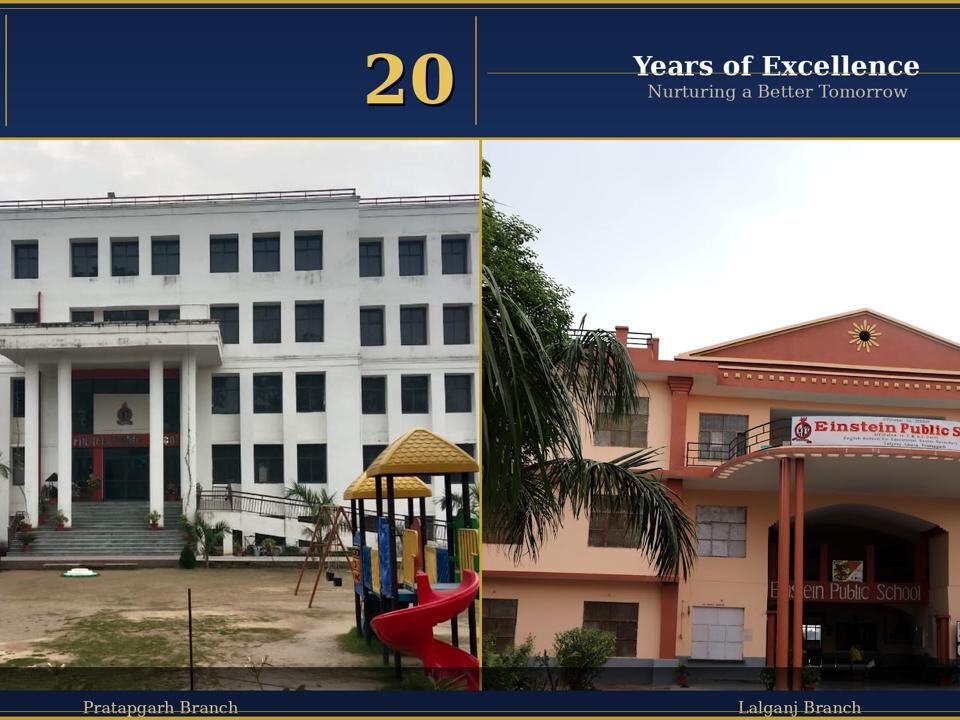
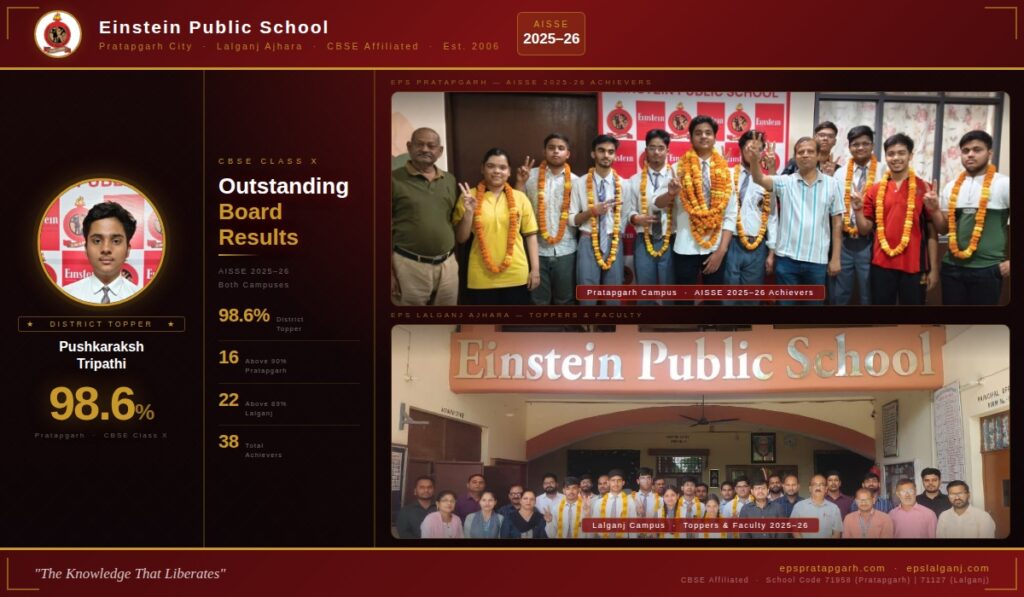
The students who were in EPS classrooms when that article was published are today engineers, doctors, Army officers, IITians, and professionals across India. The school that was a symbol of aspiration in 2014 has since opened a second campus in Pratapgarh City, doubled its student strength, and continued producing district toppers in CBSE Board Examinations year after year.
The walls of Pratapgarh still carry stories. And the story of Einstein Public School — a school that earned national recognition not by seeking it but by deserving it — is one of the finest written on them.
Read the Original
The article that started it all is available at two locations:
📰 The Indian Express (Original): Coaching Colonels in Bundelkhand, Einstein Public School in Lalganj
📰 The Print (Republished): Writings on the Wall — Coaching Colonels in Bundelkhand
We encourage every parent, student, and well-wisher of EPS to read it — not because it is about our school, but because it is about this district’s enduring belief in what education can do.
NOW ENROLLING Admissions Open for 2026–27 Nursery to Class IX & Class XI | CBSE Affiliated 📞 EPS Lalganj: +91-9455932837 / +91-9554077993 📞 EPS Pratapgarh: +91-9129012720 📧 epslalganj@gmail.com 🌐 epslalganj.com / epspratapgarh.com |
Einstein Public School — Established 2006 | Pratapgarh’s Original CBSE School | The Knowledge That Liberates